Quality assurance
Specifications In. Controlled Work Out.
Give buyers confidence that job requirements, inspection needs and customer-specific quality controls remain connected to the work being produced.
MIR runs a quality-assurance program that can be tailored to each customer's requirements. This page explains the controls and documentation buyers can expect; formal certifications and inspection equipment listings will appear here once current proof is supplied.
The quality path
Requirement capture
Your drawing, specification and QA requirements are recorded with the job — they define what "conforming" means for this part.
Material receipt
Incoming material is verified against the job before it enters production.
In-process control
Checks during the run keep the process inside the specification instead of discovering problems at the end.
Inspection & traceability
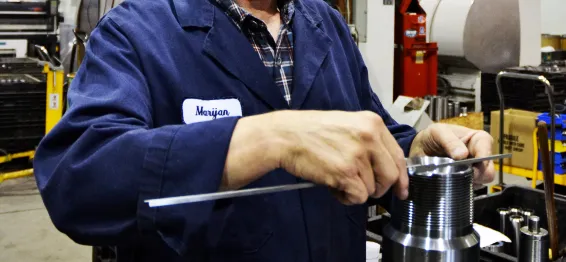
Finished work is inspected against the drawing. On oil-tool work, quality monitoring and traceability run from material receipt to delivery.
Customer-specific QA
Where your organization has its own QA program, MIR tailors the controls and documentation to that requirement.
Why it matters on repeat work
Consistency between runs is the point of contract production. Because requirements are captured with the job, a release produced this year matches the release produced last year — the specification travels with the part, not with anyone's memory.
Certifications, formal standards and inspection equipment are listed only when current proof exists; MIR does not publish credentials it cannot show.